Home care marketing built for who actually makes the decision.
Most home care ads are written to seniors. But seniors aren't the ones Googling "home care near me" — their adult children are. Stressed, time-pressed, often hundreds of miles away, trying to make a trust decision about a stranger caring for their parent.
We run digital marketing for non-medical home care and home health agencies that want to actually reach the buyer who's making the call — not the patient who might never see the ad. Plus the referral networks that drive half your business.
Why most home care marketing misses the actual buyer
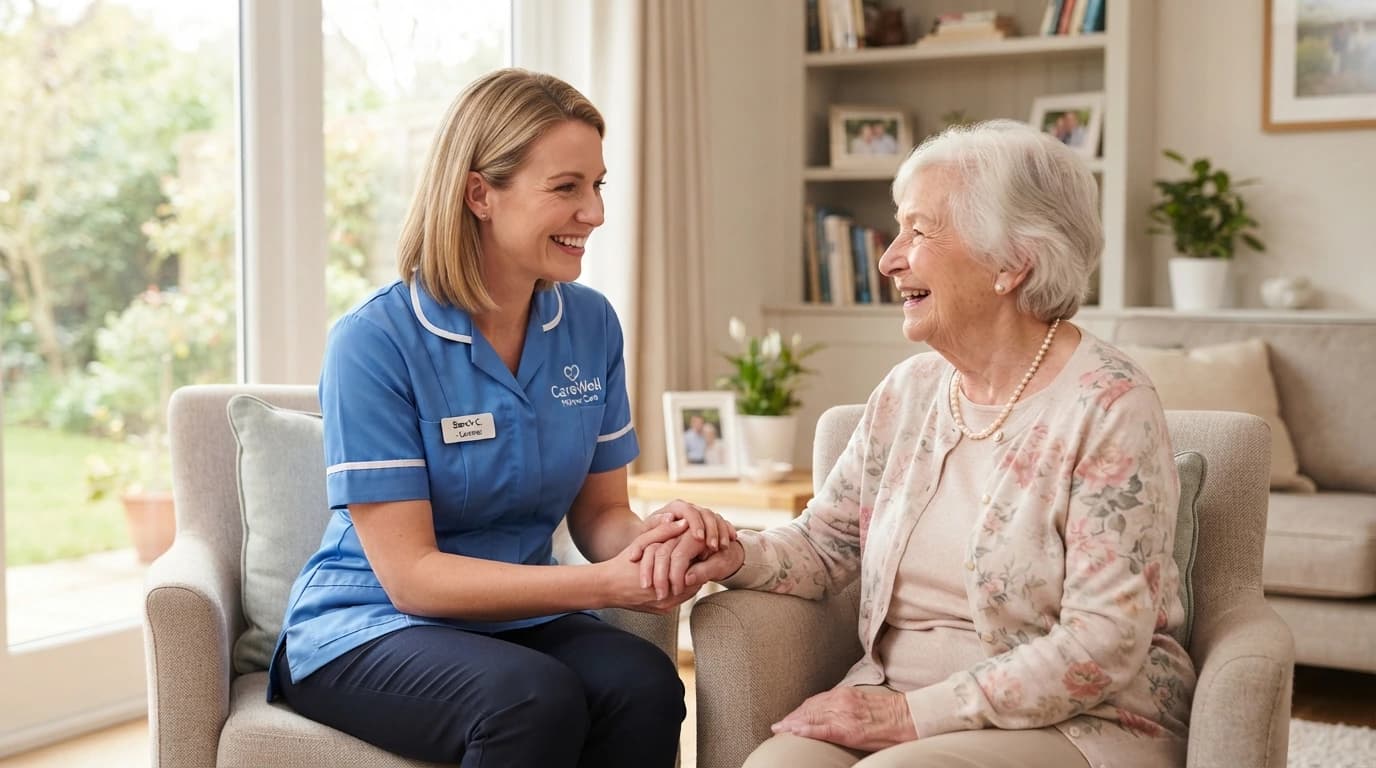
Walk through a typical home care agency's website. You'll see warm photos of seniors laughing with caregivers, soft gradients, a headline like "Compassionate care for the ones you love." The copy is written to seniors — as if seniors are the ones typing "home care near me" into Google at 11pm after their mother's fall.
They're not.
The actual buyer is almost always an adult child — usually a daughter, usually 45 to 65, often holding down a full-time job and living one to six hours from her aging parent. She's stressed. She feels guilty. She's been up late for weeks reading hospital discharge paperwork she doesn't fully understand. And she's about to trust a stranger to care for the most important person in her life.
She doesn't need a warm stock photo. She needs to know you're licensed, bonded, insured, and hireable within 48 hours. She needs to see caregiver credentials, background check policies, and clear pricing. She needs reviews from other adult children describing what it actually felt like to hire you. And she needs all of that fast, because her decision window is days, not weeks.
Most home care agencies — and most marketing agencies running home care accounts — are still writing ads to the senior. That's why their cost per qualified lead keeps climbing even as more demographic tailwinds pile up in their favor.
"The patient is not the buyer. If your marketing doesn't start from that fact, every other decision downstream is aimed wrong."
The four problems every home care agency eventually hits
Every home care operator we talk to runs into the same structural problems. Most agencies treat them as marketing problems. They're actually buyer-behavior problems that marketing has to design around.
Marketing to the patient instead of the adult child
Almost every home care website is written in second person to the senior — "we care for you," "comfort in your home," "companionship for you." The buyer is an overwhelmed adult daughter reading your site at 11pm. She needs to evaluate whether you're trustworthy for HER parent, not be spoken to as if she's the one who needs care.
We rewrite home care sites in language that speaks to the adult child making the decision. Credibility signals front and center. Caregiver credentials visible. Pricing ranges shown. Testimonials from other adult children, not just patients. The patient still matters — but the copy addresses who's actually reading it.
Some care decisions happen under real time pressure
Home care inquiries can follow urgent events such as a hospital discharge, fall, new diagnosis, or sudden change in a parent's ability to live independently. That means the buyer may be researching under pressure and may need clear answers, visible trust signals, and a fast response rather than a generic long-form nurture path.
We design for speed-to-trust. Same-day response systems. "Start care in 48 hours" CTAs where you can honestly make that promise. Content built for the specific post-trigger research moments — "what to do after mom falls," "home care vs. assisted living," "what Medicare covers for home care." Hit the buyer IN the decision window, not before or after.
Referral partners can be a major acquisition channel
Hospital discharge planners, Area Agencies on Aging, elder law attorneys, geriatric care managers, assisted living communities, and other local partners can influence a meaningful share of referrals. A digital-only plan can miss those relationship-driven acquisition paths.
We build referral development as a parallel channel where it fits the agency's model: partner tracking, educational outreach, referral-specific content, partner landing pages, and co-branded resources that support real local relationships.
Trust signals matter more here than anywhere else
Home care is one of the few industries where the buyer is literally handing over their parent's physical safety to a stranger. Trust isn't a nice-to-have — it's the entire sale. But most home care websites hide the exact signals buyers are looking for: caregiver screening process, insurance, bonding, state license numbers, parent-company structure, real reviews with dates.
We audit and surface every trust signal that exists. License numbers in the footer. Background check policies explained on the About page. Insurance and bonding documentation visible. Caregiver training standards detailed. Reviews filtered by service type and location so adult children see reviews from situations like theirs. Generic "5-star service" banners don't build trust. Specifics do.
Marketing services built for home care
Same services as any full-service agency — except each one is adapted for adult-child buyers, short decision windows, and referral partner ecosystems.
Home Care SEO
Local SEO for "home care near me" and variants. Service-area content for each city you cover. Content that answers the questions adult children actually Google — "how to pay for home care," "home care vs. assisted living," "when does Medicare cover home care."
Home Care PPC
Google Ads campaigns with search intent tightly qualified by family-decision language, post-crisis queries, and location. Dedicated Google Grants strategies for non-profit home care. Creative that addresses the adult child's specific worries, not the senior's.
Home Care Website Design
Sites redesigned for the actual buyer — adult children evaluating a trust decision under time pressure. Credentials visible. Pricing transparent. Caregiver screening process detailed. Reviews prominent. Fast load, mobile-optimized for 11pm phone research.
Home Care Social Media
Facebook and Instagram campaigns that reach adult children in their 45–65 demographic. Educational content, caregiver-spotlight posts, and review amplification. TikTok for reaching younger children researching care for their parents — growing demographic segment that most agencies miss.
Home Care Lead Generation
End-to-end lead systems designed for short decision windows. Same-day response automation, qualification by care type and urgency, CRM integration with discharge planner networks, referral partner tracking so you know which partners actually produce.
Home Care Email & Referral
Two parallel email programs: a short, high-urgency sequence for direct-to-consumer leads in the decision window, and a long-cycle referral nurture program for discharge planners, elder law attorneys, and care coordinators who need ongoing touches.
How we'd approach your home care marketing
Straight talk: every "process" section on every agency site is mostly a reassurance exercise. What we actually do depends on what you need. But here's the honest shape of a typical 90-day engagement with a home care agency.
Week 1–2: Home care market audit
We pull your current marketing performance, Google Business Profile state, Map Pack position, existing referral relationships, lead response times, and caregiver review velocity. We also audit your referral partner ecosystem — who are your top sources, which aren't producing, what's missing. Delivered as a written audit at the end of week 2.
Week 3–4: Strategy + roadmap
A 12-month plan that balances three channels: direct-to-consumer digital (SEO, PPC, web), referral partner cultivation (LinkedIn, events, partner content), and retention/review velocity (existing clients driving new inquiries). Built around your state licensing constraints and care service mix.
Month 2–3: Execute across channels
Site rewrite for adult-child-buyer language. Google Business Profile optimization with caregiver photos and specific service listings. PPC restructured with crisis-query vs. research-query split. Referral partner outreach begins. Email sequences deployed. First review-velocity campaign runs.
Month 4+: Compound and expand
Monthly strategy calls. Transparent reporting tied to booked revenue where tracking supports it. Continuous iteration. As local visibility and referral relationships develop, we evaluate whether adjacent service areas or additional channels are justified by the data.
What we'd look at for a home care client like yours
Most agencies lead this section with logo walls and fake metrics. We don't have home care case studies yet — we launched our dedicated home care practice in 2026. Instead of making numbers up, here's what we'd actually look at if we started working with you next week, using real industry benchmarks.
Non-medical home care agency, mid-sized metro
- •Paid search running without clear separation between urgent-intent and research-intent buyers
- •Acquisition cost tracked at the lead level but not tied cleanly to qualified admissions
- •Local visibility inconsistent across the primary service area
- •Referral partner relationships exist but untracked, no systematic outreach to discharge planners
- •Google reviews trickling in slowly with no post-intake review request process
- Site copy rewrite — shift from patient-facing to adult-child-buyer language (fastest conversion lift)
- Google Business Profile optimization with caregiver-focused photos and detailed service categories (Map Pack movement)
- Review velocity system — post-intake email that captures reviews at the right moment from the decision-maker
- Referral partner CRM setup + LinkedIn outreach to the top 20 discharge planners in your service area
- Google Ads restructure — separate crisis-intent campaigns ("home care after hospital discharge") from research-intent ("home care costs")
- Map Pack top 3 in primary service city
- Conversion rate lift on existing traffic from rewritten copy
- First referral partner relationships initiated and tracked
- Monthly review velocity increasing with structured post-intake outreach
- Double admissions overnight (nobody does this honestly)
- Fix caregiver recruitment issues (that's HR, not marketing)
- Replace a strong referral network overnight — those take 6–12 months to build
Want a real audit of your current home care marketing?
We'll pull your actual data, your actual competitors, your referral partner ecosystem, and tell you what we'd fix first. No pitch. No obligation.
Get Your AuditHome care marketing FAQs
How much should a home care agency spend on marketing?
Do you work with non-medical home care, home health, or both?
How long does SEO take for a home care agency?
How do you handle referral partner marketing?
Are you HIPAA compliant? Can I share client data?
Can you guarantee a specific number of admissions?
Do you work with home care franchises or only independents?
Do you work with competing home care agencies in the same market?
Other industries we serve
Ready to rebuild how your
home care agency markets?
Get a free home care marketing audit. We'll pull your actual data, analyze your competitors, assess your referral partner ecosystem — and tell you what we'd fix first. No pitch deck. No fluff. Just a written audit you can use whether you hire us or not.