Marketing for HVAC companies built around how your buyers actually buy — not how agencies wish they did.
An HVAC buyer with a broken AC in August is not the same buyer as a homeowner planning a system replacement in a shoulder month. Paid-search costs and lead quality can shift with weather, competition, and urgency, so HVAC campaigns need to account for seasonality instead of using one static playbook all year.
We run marketing for residential and commercial HVAC contractors who want a system built around the realities of the industry — emergency demand, seasonality, local intent, trust barriers, and very different buying journeys for urgent repairs versus planned replacements.
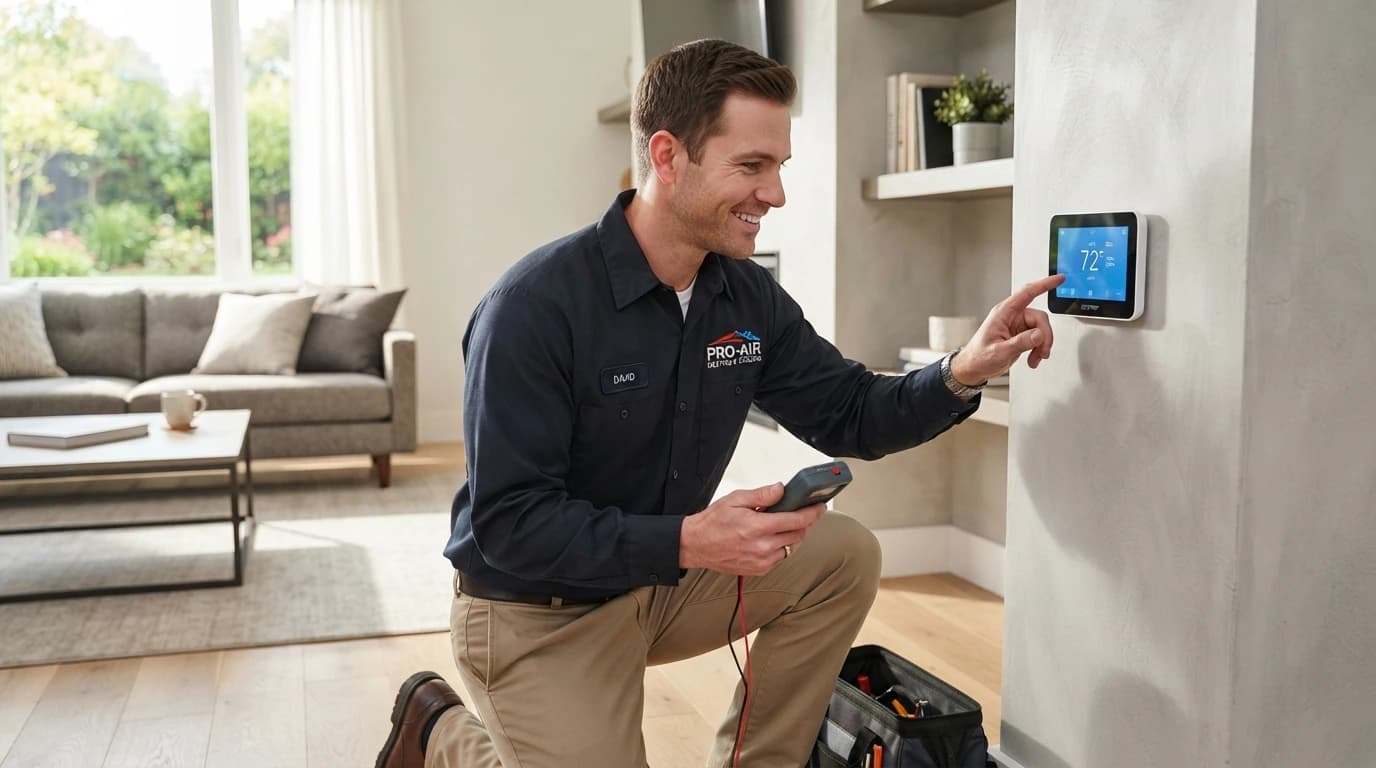
Why HVAC marketing is different — and why generic agencies keep getting it wrong
HVAC demand can move at very different speeds. An emergency repair buyer may contact a contractor immediately, while a homeowner planning a system replacement may spend much longer comparing options, financing, warranties, and equipment. Those buyers should not be forced through the same campaign and landing-page experience.
Generic digital marketing doesn't account for any of this.
A generic approach may use the same paid-search structure and budget throughout the year even when weather, auction pressure, and buyer urgency change. That can mix emergency-repair demand with planned-replacement demand and make it harder to understand what is actually driving qualified opportunities.
HVAC marketing that actually works needs to separate the emergency demand channels (LSA, urgent search, "near me" queries) from the planned-purchase demand channels (financing content, system comparisons, seasonal maintenance). Each gets different creative, different landing pages, different budgets, and different qualification flows. Most agencies don't do this work because it's expensive and detailed. We do.
We also don't treat residential HVAC and commercial HVAC as the same business. A homeowner evaluating a replacement system has a different buying process from a facilities manager sourcing equipment for a commercial property. Different cycle. Different buyers. Different playbook.
"HVAC has very different buyers under the same service category: the homeowner who needs an urgent repair and the homeowner planning a future system replacement. They should not be forced through the same campaign and conversion path."
The four marketing problems every HVAC company eventually hits
These problems show up in different combinations depending on market, service mix, seasonality, and sales process. We diagnose which ones are actually limiting performance before deciding where to spend.
Seasonality destroys flat marketing budgets
A flat monthly HVAC marketing budget can ignore meaningful changes in weather, search demand, auction pressure, booking capacity, and service mix. The right allocation can look different during peak demand than it does in a shoulder month.
We review paid demand, organic opportunity, booking capacity, and upcoming seasonal conditions regularly, then adjust channel allocation when the data supports it instead of assuming the same budget mix should run all year.
Emergency leads and planned-purchase leads need different funnels
A homeowner searching "AC repair near me" during an urgent breakdown needs immediate service information, availability, and a clear way to call or book. A homeowner researching "cost to replace HVAC system" may need financing context, efficiency comparisons, warranties, and proof. One generic conversion path rarely serves both intents equally well.
We build separate conversion paths: urgent-intent landing pages optimized for same-day calls, planned-purchase landing pages built for research and financing, with different ad campaigns feeding each. The homeowner in panic sees one experience; the homeowner researching sees a different one.
Trust is the real conversion barrier in HVAC
HVAC has a reputation problem that's earned. Every homeowner knows someone who got screwed by a contractor — overcharged, wrong part, pressured into a full replacement. Before they care about your financing or your equipment tier, they need to believe you won't be the company they later warn their neighbors about.
We build trust-heavy web experiences: real technician photos with names and certifications, transparent pricing ranges, actual install timelines, detailed warranty terms, and third-party reviews prominently surfaced. It's unglamorous work. Almost nobody does it well. Done right, it closes deals generic sites can't.
Local visibility needs its own workstream
For searches with local intent, Google Business Profile visibility and local organic coverage can materially affect whether an HVAC company is discovered. Weak profiles, inconsistent business information, thin service-area content, and limited review activity can all reduce local competitiveness.
We treat local SEO as an ongoing workstream: Google Business Profile accuracy and completeness, compliant review acquisition, relevant service-area pages, citation consistency, and on-site local signals reviewed together rather than as a one-time setup task.
Marketing services built for HVAC businesses
Same services as any full-service agency — except each one is adapted for how HVAC buyers actually search, buy, and convert. Each service below links to a deeper page with our HVAC-specific approach.
HVAC SEO
Local SEO for the Map Pack, service-area content for surrounding cities, and technical SEO built for HVAC-specific buyer queries — "AC repair near me," "HVAC financing," "furnace replacement cost [city]."
HVAC PPC & LSA
Google Ads and Local Service Ads run with HVAC-specific seasonality logic. Emergency-intent campaigns separated from planned-purchase campaigns. Match type discipline that filters out tire-kickers and residential DIY-ers.
HVAC Website Design
Sites that convert both emergency and planned-purchase buyers. Dispatch CTAs for urgent traffic, financing calculators and system comparison tools for researchers, real technician credentials and reviews surfaced throughout.
HVAC Social Media
Meta and TikTok campaigns built for the HVAC buyer journey — trust-building content, maintenance tips that show expertise, retargeting for visitors who looked at replacement pricing but didn't convert.
HVAC Lead Generation
End-to-end lead systems — capture, qualify by emergency vs. planned-purchase intent, route to the right team, and nurture planned buyers who are not ready to make a decision immediately.
HVAC Email & Nurture
Seasonal maintenance reminders for existing customers. Financing updates and replacement-timing nudges for planned-purchase leads. Post-install follow-ups designed to drive review velocity at the right moment.
How we'd approach your HVAC marketing
What we actually do depends on what the audit shows. The phases below illustrate how we typically move from diagnosis to execution and ongoing optimization without promising the same timeline for every HVAC company.
Week 1–2: HVAC market audit
We pull your current marketing data, your top 3–5 competitors in your service area, your existing Google Business Profile status, your Map Pack rankings, your LSA profile quality, and where leads are leaking out of your funnel. Delivered as a written audit at the end of week 2.
Week 3–4: Seasonal strategy + roadmap
A 12-month action plan that accounts for your market's seasonality — when to spend aggressively (peak months), when to shift to SEO and content investments (shoulder months), what to prioritize first. Built around your revenue goals, not vanity metrics.
Month 2–3: Execute across channels
Map Pack cleanup and review velocity kick off immediately. LSA profile gets optimized. Google Ads gets restructured with separate emergency/planned-purchase campaigns. Web CRO fixes deploy. Email sequences go live. We sequence the work based on what moves the needle fastest in your market.
Month 4+: Optimize and scale through seasons
Monthly strategy calls that review both performance AND the next 60 days of seasonal demand. Transparent reporting tied to booked revenue, not impressions. Budget reallocated dynamically as seasons shift. Constant iteration based on what's working in your specific market — not generic best practices.
What we'd look at for an HVAC client like yours
We don't have HVAC case studies to publish yet — we launched our dedicated HVAC practice in 2026. Instead of presenting invented outcomes, here's the type of account structure and diagnostic work we'd review with a regional HVAC contractor.
Regional residential HVAC contractor, mid-sized metro
- •How Google Ads is segmented by emergency repair, maintenance, and planned replacement intent
- •Whether qualified appointments and booked revenue are tied back to campaign and search term
- •Google Business Profile visibility and local organic coverage across priority service areas
- •LSA profile quality, lead handling, reviews, and dispute process where the product is available
- •How urgent and planned-purchase inquiries are qualified, routed, and followed up
- Improve Google Business Profile completeness, review workflows, and service-area relevance where local visibility is weak
- Review LSA setup, eligibility, profile quality, lead handling, and reporting where LSAs are part of the mix
- Separate emergency-repair and planned-replacement paid-search intent with appropriate landing pages
- Audit search terms, match types, negatives, bidding, and conversion actions before increasing spend
- Route urgent inquiries and planned-purchase inquiries into follow-up paths that match how each buyer needs to be handled
- A documented baseline for local visibility, paid media, lead handling, and conversion tracking
- Clear priorities tied to the problems found in the account rather than generic benchmarks
- Reporting that separates lead volume from qualified opportunities and booked revenue where data is available
- Ongoing optimization based on measured performance, seasonality, and operational capacity
- Double your appointments overnight (nobody does this honestly)
- Eliminate seasonality (that's a business model problem, not marketing)
- Solve technician capacity issues (marketing can't fix ops)
Want a real audit of your current HVAC marketing?
We'll pull your actual data, your actual competitors, your actual gaps — and tell you what we'd fix first. No pitch. No obligation.
Get Your AuditHVAC marketing FAQs
How much should an HVAC company spend on marketing?
Should I invest in LSA, Google Ads, or both?
How long does HVAC SEO take to show results?
How do you handle seasonality in HVAC marketing?
Do you work with both residential and commercial HVAC?
Can you guarantee a specific number of leads or CPA?
Do you work with HVAC contractors of all sizes?
Do you work with competing HVAC companies in the same market?
Other industries we serve
Ready to rebuild how your
HVAC company markets?
Get a free HVAC marketing audit. We'll pull your actual data, analyze your competitors, identify the gaps — and tell you what we'd fix first. No pitch deck. No fluff. Just a written audit you can use whether you hire us or not.