HVAC Web Design
HVAC website projects should improve more than visual style. We focus on clear contact paths, separate journeys for urgent repair and planned replacement, useful service-area content, mobile performance, and measurement.
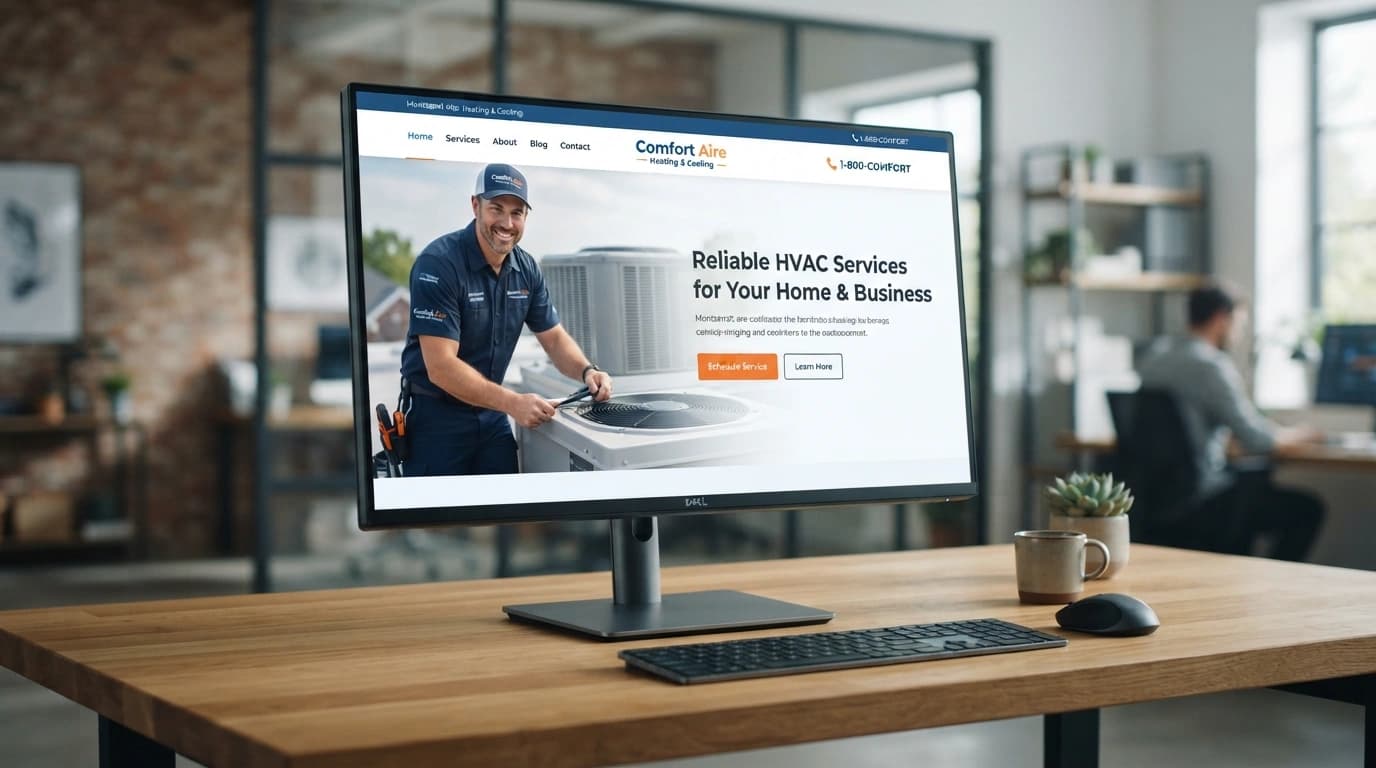
HVAC web design is mostly a conversion problem dressed up as a design problem
Most HVAC contractors asking for a website redesign think they're asking for a visual upgrade. They're usually not. They're asking for more leads, more booked jobs, and more revenue out of the same traffic — and they've concluded the site looks dated, so the site must be the problem.
Sometimes that's right. HVAC sites that genuinely look five years out of date do hurt conversion through credibility erosion. But far more often, the visual design isn't what's broken — the conversion architecture is. The phone number is buried in a footer. The same generic home page tries to serve both emergency-mode buyers (who want one tap to call) and planned-mode buyers (who want financing math and brand credentials). The "Service Areas" page lists 20 cities on one page instead of having dedicated pages for each. The maintenance plan offer is hidden behind a navigation link. Mobile load time is six seconds.
Buyers rarely describe these problems directly. They simply leave, call someone else, or continue comparing. A redesign that changes only the visual layer can leave the underlying conversion problems untouched.
Useful HVAC conversion work can include persistent contact options, distinct service pages, genuinely local service-area content, a clear quote flow for planned replacements, understandable maintenance-plan information, original proof, and strong mobile performance. The right priorities come from the site audit and conversion data.
None of that requires a visual overhaul. All of it requires conversion thinking most agencies don't bring to HVAC work.
"Visual polish matters, but an HVAC website also has to reduce friction, answer buyer questions, establish trust, and make the next step easy to take."
Why most HVAC websites underperform
Phone number buried instead of prominent
Emergency buyers should not have to hunt for contact options. We make the phone number and booking path easy to reach on desktop and mobile, then use analytics and call tracking to understand how visitors actually convert rather than assigning a universal conversion penalty to each extra tap.
One generic site for two completely different buyers
HVAC sites often need to serve at least two buyer modes — emergency repair and planned replacement. A generic homepage can make both journeys harder if urgent visitors cannot find a clear contact path and planned-replacement visitors cannot find financing, equipment, proof, or consultation information.
Generic agency templates with city names swapped
Template-driven HVAC sites can make competitors look interchangeable when the structure, messaging, proof, service-area content, and calls to action follow the same pattern. We use repeatable components where they help, but the buyer journey, local information, and proof should reflect the contractor's actual market and services.
Slow load times eating paid budget
Heavy video, oversized images, excessive third-party scripts, and weak mobile optimization can slow an HVAC site and waste paid traffic before visitors reach the offer. We treat performance as part of conversion work, not only as a Core Web Vitals checklist.
The six elements HVAC websites specifically need
These aren't generic web design best practices. They're HVAC-specific conversion considerations built around two different buyer modes — emergency and planned — plus local relevance, trust, financing questions, and measurement.
Phone-first emergency conversion
Click-to-call buttons in the header, hero, sticky mobile bar, and relevant service pages should work cleanly and route through call tracking where appropriate. Emergency buyers may prefer calling, so the phone path should be easy to find without assuming every visitor behaves the same way.
Dedicated service pages (repair + install + brand)
Separate pages for AC repair, AC installation, furnace repair, furnace installation, heat pump install, mini-split install, ductwork, indoor air quality, and maintenance plans. Plus brand-authorized-dealer pages if you're a Carrier, Trane, Lennox, or Bryant dealer. Generic "Services" pages lump everything together and convert poorly. Dedicated pages rank, convert, and set up clean campaign architecture for paid.
Service-area pages by city / neighborhood
Dedicated service-area pages can help explain where the company actually works and provide locally relevant information when each page is accurate, useful, and genuinely distinct. We avoid template-swapped city pages and treat local landing pages as part of a broader local-search strategy rather than a guaranteed Map Pack or ranking tactic.
Install quote + financing flow
Planned-replacement buyers want estimators, financing math, and clear next steps — not a "Call us for a quote" CTA. A multi-step quote flow (system type, home size, current equipment, financing preference) qualifies the buyer, gives them a ballpark, and books a consultation. Plus a dedicated financing page with realistic monthly payments tied to your specific lender programs.
Maintenance plan conversion path
Maintenance plans can support recurring customer relationships, but many contractor sites make the offer difficult to understand or find. A dedicated page can explain pricing, inclusions, eligibility, and sign-up clearly without presenting the program as a universal profit driver.
Mobile-first speed (under 2s)
HVAC websites should work cleanly on mobile connections and smaller screens. We prioritize responsive layouts, accessible tap targets, restrained media, and fast-loading pages so paid and organic visitors can reach the next step without unnecessary friction.
What good actually looks like
Public benchmarks so you can sanity-check your own site against the category. If your numbers are well outside these ranges, the explanation is usually structural — not seasonal.
Why this math compounds across every channel
Conversion improvements increase the value of traffic you already earn or pay for. That is why we treat the website as part of the acquisition system: better messaging, lower friction, stronger proof, and cleaner measurement can improve the efficiency of SEO, paid media, LSAs, social, and referral traffic together.
How we approach HVAC website rebuilds
Conversion audit + analytics review
We pull your current analytics, heatmaps if available, mobile speed scores, conversion paths, call tracking data, and bounce rates by page. Then we identify the three to five highest-leverage fixes — usually some combination of phone-number prominence, dedicated service pages, service-area page expansion, mobile speed, and quote flow. Most clients are surprised how few changes drive most of the lift.
Architecture before aesthetics
We map the new site around buyer questions and search intent: dedicated service pages by equipment type, useful service-area pages where the business genuinely operates, brand-authorized-dealer pages if applicable, financing and maintenance-plan funnels, and clear emergency vs. planned buyer paths. Aesthetics support that architecture rather than replacing it.
Phone-first conversion infrastructure
Sticky persistent click-to-call across every page and screen size, dynamic call tracking integration (CallRail or similar), offline conversion imports for booked jobs, multi-step quote flow for planned-replacement buyers, dedicated maintenance plan signup. The integrations matter more than the visual polish.
SEO-preserving migration
URL mapping, 301 redirect plan, schema preservation, service-area page migration, crawl audit before launch. If you've been doing SEO for a year, the rebuild preserves that — not resets it. This is where most HVAC website rebuilds go wrong and lose six months of organic traffic in the migration week.
Post-launch CRO + iteration
Launch creates the baseline. Afterward, we review real user behavior, quote-flow performance, service-area page engagement, calls, forms, and mobile-versus-desktop differences, then test improvements when the available traffic and data support a useful comparison.
HVAC web design FAQs
How long does an HVAC website rebuild take?
What does an HVAC website cost?
WordPress, Webflow, or custom build?
Do I really need a separate page for every service area?
How important is the maintenance plan section of the site?
What about SEO during a website rebuild?
Can I see examples of HVAC sites you've built?
Web design is the leverage point. Here's what flows through it.
Want to know what your
HVAC site is leaking?
Get a free HVAC website audit. We'll review your phone-number prominence, mobile speed, service-page structure, service-area page coverage, and quote flow — and tell you which three fixes would move the needle hardest. No pitch.