Roofing SEO
Roofing SEO should not depend on a single query such as "roofer near me." We build broader coverage around services, materials, insurance questions, storm preparation, and local intent, then measure which topics actually generate qualified organic opportunities.
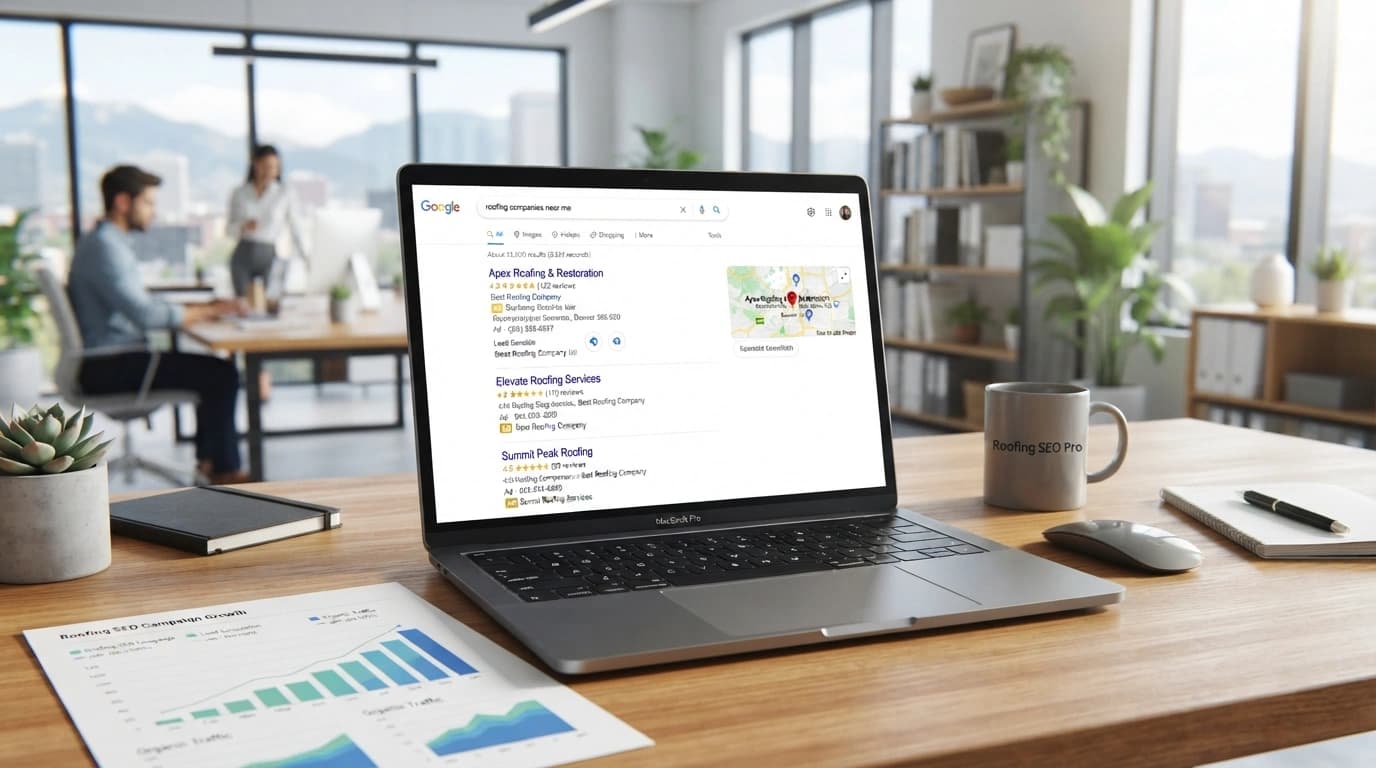
Roofing SEO is mostly a content cluster problem disguised as a rankings problem
Many roofing businesses understandably watch where they appear for "roofer near me." But the search results page can also include Local Services Ads, local results, AI-generated features, and other modules depending on the query and market. We therefore measure visibility across the full search experience instead of treating one organic ranking as the entire SEO program.
The compounding work in roofing SEO is the broader set of searches that buyers use before they contact a contractor. Insurance questions, material comparisons, storm-readiness topics, repair-versus-replacement decisions, and service-area searches can all create useful discovery paths. We build these clusters around real buyer intent instead of relying on one head term.
None of this has a universal timeline. Progress depends on the site's starting point, competition, technical health, local prominence, content quality, and how quickly changes are implemented. We establish a baseline, prioritize the highest-value gaps, and measure visibility, qualified organic traffic, and inquiries over time.
There's also a trust dimension to roofing SEO that doesn't exist as sharply in solar or HVAC. After major weather events, out-of-state storm chasers flood local markets, and homeowners are increasingly aware of the pattern. SEO content has to carry the legitimacy load — surfacing years in business, local addresses, manufacturer certifications, licensing, and community footprint — across every page a buyer might land on. A great article that doesn't make clear you're a real local roofer with a long track record loses to a lesser article from a competitor who does. Trust signals aren't a footer thing. They're an SEO and conversion thing on every page.
This page is built for roofing companies — residential or commercial, single-location or regional — that want a real organic moat instead of a rotating dependency on paid leads. We'll tell you honestly during scoping whether SEO is the right primary investment for your situation or whether paid is a better near-term fit while organic builds behind it.
"Roofing SEO that only chases ‘roofer near me’ is fighting for a shrinking slice of the page. The compounding moat is the insurance, materials, and storm-readiness clusters most roofing sites don't even compete on."
Why most roofing SEO programs underperform
Building thin "roofer in [city]" doorway pages
Mass-producing near-duplicate city pages creates thin local coverage and can look like doorway content. We prefer a smaller set of substantive service-area pages that reflect real services, neighborhoods, project evidence, and buyer questions in each market.
Ignoring the insurance claim keyword cluster entirely
Most roofing websites have a single "insurance claims" page that says we work with all major insurers and we'll help you through the process. That ranks for nothing. The actual high-intent traffic lives in queries the homeowner is panic-Googling at 11pm: "State Farm denied roof claim," "adjuster only paying for partial replacement," "do I have to use insurance recommended roofer." These queries are loaded with intent and almost nobody is competing on them. Roofers who build real content here get high-quality leads at near-zero competition.
Treating storm response as reactive content
Storm-related content should be treated as evergreen infrastructure rather than a last-minute publishing sprint. Important pages need time to be discovered, indexed, and evaluated before a weather event changes local demand.
Losing the Map Pack + LSA squeeze without compensating
Local roofing results can include LSAs, a Map Pack, and organic listings, so relying on one head term is fragile. We build broader coverage across local commercial intent, insurance questions, materials, storm response, repair-versus-replacement topics, and problem diagnosis.
The 2018 roofing SEO playbook is actively hurting roofers who still run it
Publishing large numbers of thin, near-duplicate geo-pages creates quality and doorway-page risks and can make a site harder to maintain. We prefer a smaller set of genuinely useful location pages for markets the contractor actually serves, with distinctive local information and a clear reason for each page to exist.
The five content clusters that actually compound for roofing
Each cluster targets a distinct buyer mode. We prioritize the clusters that match your actual services, markets, and search-demand gaps rather than assuming the same content order for every roofer.
Local & service-area pages
The foundation is useful service-area coverage for markets you genuinely serve. We build substantive local pages with real market information, services, proof, and internal links instead of mass-producing city-name swaps or doorway-style pages.
Insurance claim cluster
The most under-served high-intent keyword cluster in roofing. Queries like "will insurance cover roof replacement," "adjuster denied my roof claim," "how to file a roof insurance claim," and "matching shingles after partial damage" pull in homeowners who are already deep in a buying process — they have a damaged roof and an insurance company. Most roofing sites have nothing for these queries. The roofers who build genuine educational content here capture leads competitors don't even know exist.
Material-specific clusters
Asphalt shingle buyers and standing-seam metal buyers are different people with different price points, different research patterns, and different conversion timelines. Treating them as one audience on a generic "roofing services" page is why most roofer sites convert poorly. We build out separate clusters for asphalt, metal, slate, tile, flat/TPO, cedar shake — each with its own pricing content, lifespan content, comparison content, and gallery. Buyers self-select into the cluster that matches their decision.
Storm-readiness & damage content
Roofing demand can spike after weather events, so useful storm-readiness content should exist before the event rather than being created only after search demand has already changed. We plan evergreen damage, inspection, and local storm content around the markets you actually serve.
Commercial roofing content (if applicable)
If you do commercial work, it's a fundamentally different SEO play with longer-tail B2B queries — TPO vs. EPDM, commercial roof maintenance contracts, flat roof leak diagnosis, low-slope roofing systems. The buyer is a facilities manager or property owner, not a homeowner, and the content has to read that way. Most roofing sites bury commercial as a footer link; for roofers who genuinely want commercial work, it deserves its own cluster with pricing transparency, certification surfacing, and case study depth.
The insurance claim cluster is roofing SEO's biggest open opportunity
A generic "insurance claims" page may miss the specific questions homeowners ask during a claim. We research topics such as adjuster disputes, denial reasons, supplement requests, and partial-replacement questions, then build only the pages that are accurate, useful, and relevant to the contractor's real services and market.
Trust signals & storm-chaser defense
In post-storm markets, out-of-state contractors flood the area within days. Local roofers compete on legitimacy — and that fight has to be carried by your site, not by the door-knocker out-pacing them. These signals belong on every page a buyer might land on, not just your "About" page.
How we work on roofing SEO engagements
Technical & content audit
We review your site, existing visibility, Google Business Profile, backlink profile, technical health, service-page structure, and competitor landscape. The audit documents specific issues and opportunities before we recommend a work plan instead of assuming every roofing site has the same SEO problems.
Local foundation + service area
We improve Google Business Profile quality, compliant review acquisition, local citations, schema where appropriate, and substantive service-area pages for cities and neighborhoods the contractor genuinely serves. We favor a smaller number of useful local pages over large batches of thin geo-clones and measure their performance rather than promising rankings.
Long-tail cluster build
We sequence the content clusters based on your starting point and competitive landscape — usually insurance claim and material-specific clusters first because competition is thinnest, storm-readiness next so it can mature before season, commercial last if applicable. Two to four substantive pieces published per month, each with original photography and roofer-authored substance.
Trust signal surfacing across the site
Years in business, certifications, local address, licensing, BBB, manufacturer affiliations — these get surfaced consistently across every page a buyer can land on, not buried in a footer. Storm-chaser defense and E-E-A-T support are the same project from a SEO perspective.
Monthly reporting tied to organic leads + revenue
Every report ties work back to organic leads booked and revenue closed — not just rankings. Rankings are an input. Leads and revenue are the output. If a content cluster isn't producing measurable lead flow within a reasonable window, we say so and rebalance.
Roofing SEO FAQs
How long does roofing SEO take to start producing leads?
What's the difference between roofing SEO and just running Google Ads?
Should I focus on residential or commercial roofing SEO?
How important is content for roofing SEO? Can I just optimize my existing pages?
How does insurance claim content actually work for SEO?
What about storm response — how do I rank for storm-related queries when the weather is unpredictable?
Can you guarantee specific rankings or lead volume?
SEO is the moat. Here's the rest of the program.
Want SEO that
compounds, not rents?
Get a free roofing SEO audit. We'll review your technical foundation, content clusters, trust signal surfacing, and where competitors are eating your lunch — and tell you what's working, what's broken, and what to fix first. No pitch.