Solar Web Design
Most solar sites aren't broken on design. They're broken on conversion architecture. We rebuild solar websites around savings estimators, financing transparency, and the specific buyer questions that turn visitors into booked consultations.
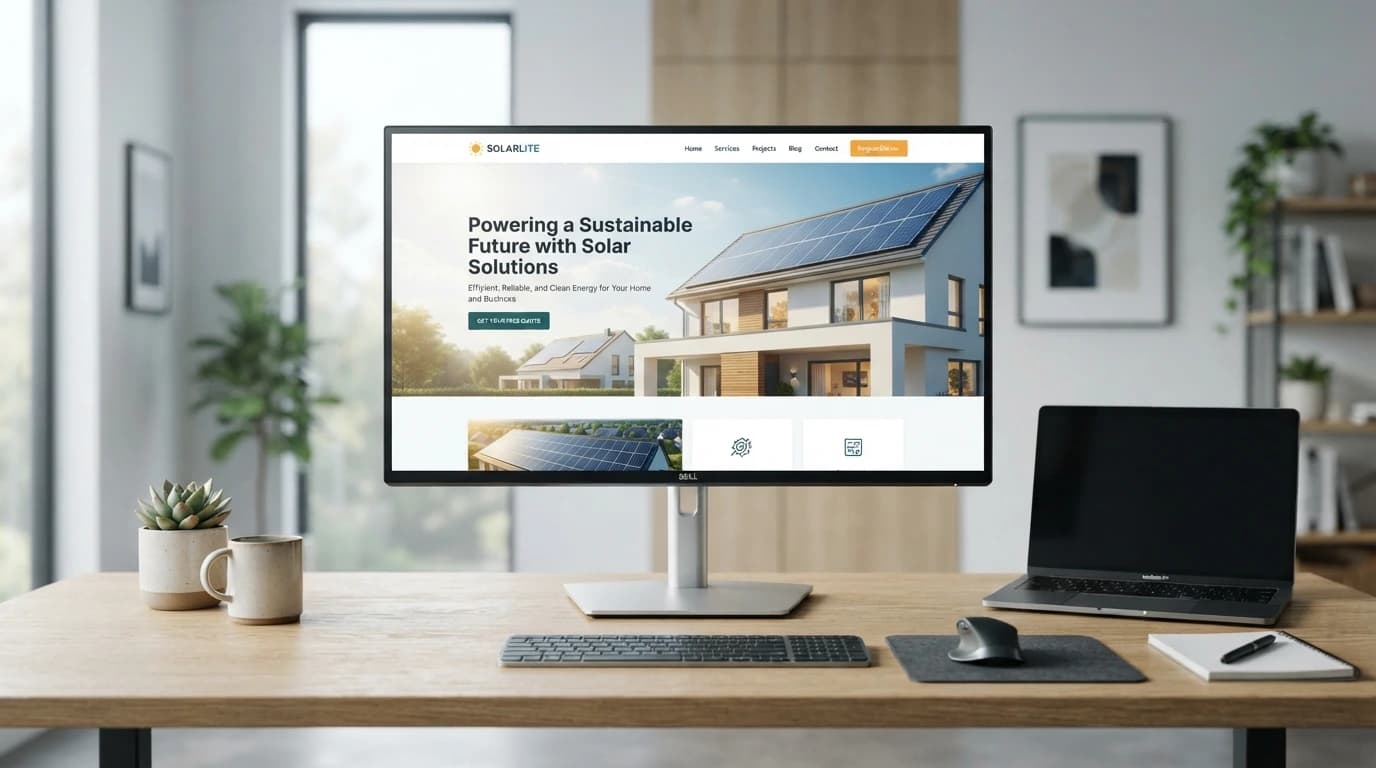
Solar web design is mostly a conversion problem dressed up as a design problem
Most solar companies asking for a website redesign think they're asking for a visual upgrade. They're usually not. They're asking for more leads, more booked consultations, and more revenue out of the same traffic — and they've concluded the site looks dated, so the site must be the problem.
Sometimes visual credibility is part of the problem. But often the larger issue is conversion architecture: no useful savings or financing context, unclear next steps, unnecessary form friction, generic proof, or a mobile experience that makes it harder to act.
Buyers rarely describe the problem in those terms. They simply leave, delay the decision, or continue comparing installers. A redesign that changes only the visual layer can leave the underlying conversion problems untouched.
What can improve the experience in solar specifically: useful savings and financing tools, clear incentive explainers, original installation proof, a straightforward consultation path, and strong mobile performance. Some sites need a visual redesign; others need better architecture, content, measurement, or integrations more than a new aesthetic.
"Visual polish matters, but a solar website also has to answer buyer questions, establish trust, and make the next step easy to take."
Why most solar websites underperform
Pretty sites with no conversion path
A solar website can look polished and still underperform if the conversion path is unclear. The design may not be the problem. Missing financing context, weak calls to action, unclear consultation steps, or thin buyer education can create friction even when the visual presentation is strong.
Generic templates dressed up as custom
Generic templates can make competing solar companies look interchangeable when the structure, messaging, proof, and calls to action all follow the same pattern. We use reusable components where they help, but the information architecture and buyer journey should reflect the company's actual market, offer, and differentiation.
Treating the site as a brochure, not a sales tool
Many solar websites are organized primarily around the company rather than the buyer. Pages about services and process still matter, but the site should also answer questions about financing, installation, incentives, warranties, roof considerations, and what happens next. Organizing important content around buyer intent can make the path to a consultation clearer.
Slow load times eating paid traffic
Heavy video, oversized images, excessive third-party scripts, and weak mobile optimization can slow a site down and waste paid traffic before visitors reach the offer. We treat performance as part of conversion work, not only as a technical scorecard.
The six elements solar websites specifically need
These are solar-specific conversion considerations built around the questions buyers may have before requesting a consultation.
Savings + payback estimator
A simple estimator can help buyers explore potential savings, payback assumptions, and system economics before they book a consultation. The goal is to make the next step easier while giving your sales team more context about what the buyer is trying to understand.
Financing options page (with the actual math)
Cash, loan, lease, PPA — explained with realistic monthly payments tied to typical system sizes in your service area. Most solar sites bury financing or send buyers to generic third-party explainers. The buyers who care about financing are the buyers most likely to convert; show them the answer instead of making them ask.
ITC + state incentive explainer
A page (or section) that explains the federal Investment Tax Credit, state-specific incentives, utility buyback rates, and any net metering rules in your service area — updated annually. Solar buyers Google these constantly during the research cycle. Owning the answer on your site keeps them on your funnel instead of a competitor's.
Real install gallery (not stock photography)
Photos of installs your team has actually completed — on real homes, in your service area, and used with appropriate permission. Original project photography can provide stronger proof than generic stock imagery and help buyers understand the kind of work your team performs.
Frictionless consultation booking
Use a clear booking path with only the information needed to qualify and route the inquiry. Direct scheduling can reduce friction when it fits the sales process, while longer forms should be reserved for cases where the extra information is genuinely necessary.
Mobile-first speed and layout
Solar websites should work cleanly on mobile connections and smaller screens. We prioritize responsive layouts, clear tap targets, restrained media, and fast-loading pages so paid and organic visitors can reach the next step without unnecessary friction.
What good actually looks like
Instead of relying on universal conversion benchmarks, we evaluate the parts of the experience that can be measured and improved on your own site.
Why this math compounds across every channel
Conversion improvements increase the value of traffic you already earn or pay for. That is why we treat the website as part of the acquisition system: better messaging, lower friction, stronger proof, and cleaner measurement can improve the efficiency of SEO, paid media, social, and referral traffic together.
How we approach solar website rebuilds
Conversion audit + analytics review
We review your current analytics, heatmaps if available, mobile performance, conversion paths, and form or booking behavior. Then we prioritize the changes most likely to remove friction, improve buyer understanding, and strengthen measurement.
Architecture before aesthetics
We map the new site around buyer questions, not company hierarchy: financing, ITC and incentives, installation process, savings, warranty, comparison content. Aesthetics come second — and they're built to support the architecture, not to lead it.
Estimator + booking integration
We build (or integrate) the savings estimator, install Calendly or Cal.com for direct booking, integrate with your CRM and call tracking, and set up offline conversion imports so booked consultations get tied back to traffic source. The integrations matter more than the visual polish.
SEO-preserving migration
URL mapping, redirect planning, metadata and structured-data review, and pre-launch crawling are built into the migration. The goal is to preserve useful search signals and catch avoidable technical errors before the new site replaces the old one.
Post-launch CRO + iteration
Launch creates the baseline. Afterward, we review real user behavior, estimator usage, form and booking performance, and mobile-versus-desktop differences, then test improvements when the available traffic and data support a useful comparison.
Solar web design FAQs
How long does a solar website rebuild take?
What does a solar website cost?
WordPress, Webflow, or custom build?
Do you build the savings estimator from scratch?
What about SEO during a website rebuild?
Can I see examples of solar sites you've built?
What about ongoing optimization after launch?
Web design is the leverage point. Here's what flows through it.
Want to know what your
site is leaking?
Get a free solar website audit. We'll review your conversion architecture, mobile performance, estimator presence, financing transparency, and booking flow — and identify the highest-priority issues to address first. No pitch.